Build a Knowledge Base for a Voice Agent
Keep your voice agents honest. A knowledge base is a library of approved answers — project details, FAQs, policies, scripts — that the agent quotes during a call instead of guessing at prices, inventory, or policy. Build the library once from FAQs, files, and web pages, then attach it to every agent that needs it; update it in one place and every attached agent stays current.
Entry pointAutomation → AI Assistants → Knowledge Base
| Article summary | Details |
|---|---|
| Requires | Permission to manage knowledge bases and edit agents. |
| Where to go | Automation → AI Assistants → Agents → Knowledge Base (to create), or Build → Agent Details → Knowledge Bases card (to attach). |
Open the Knowledge Base Tab
- Open Automation → AI Assistants → Agents.
- Switch to the Knowledge Base tab.
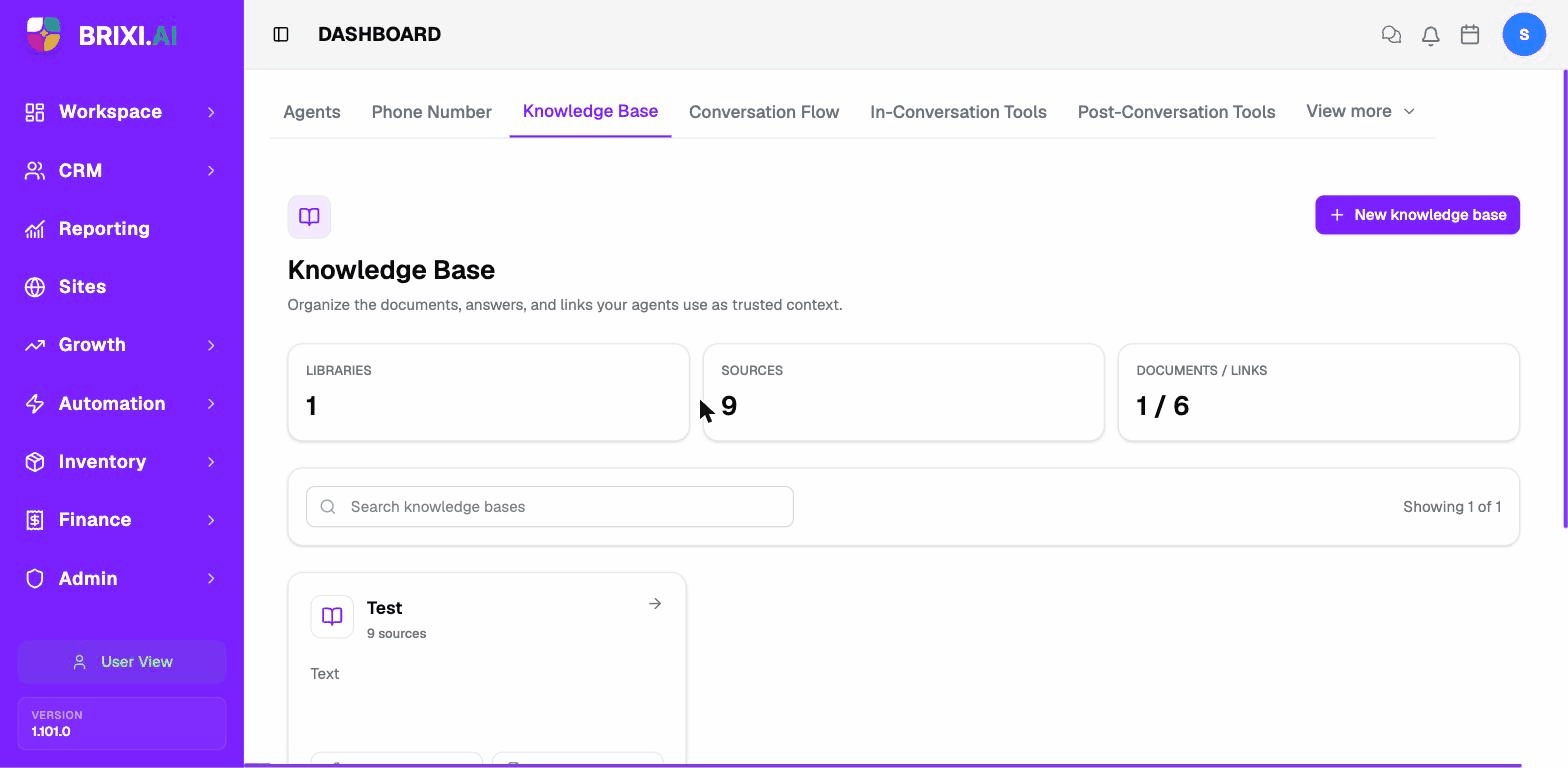
The tab header reads "Organize the documents, answers, and links your agents use as trusted context." Three counters sit below the header:
- LIBRARIES — total knowledge bases in this workspace.
- SOURCES — total sources across all libraries.
- DOCUMENTS / LINKS — total uploaded documents and crawled links.
Create a Knowledge Base
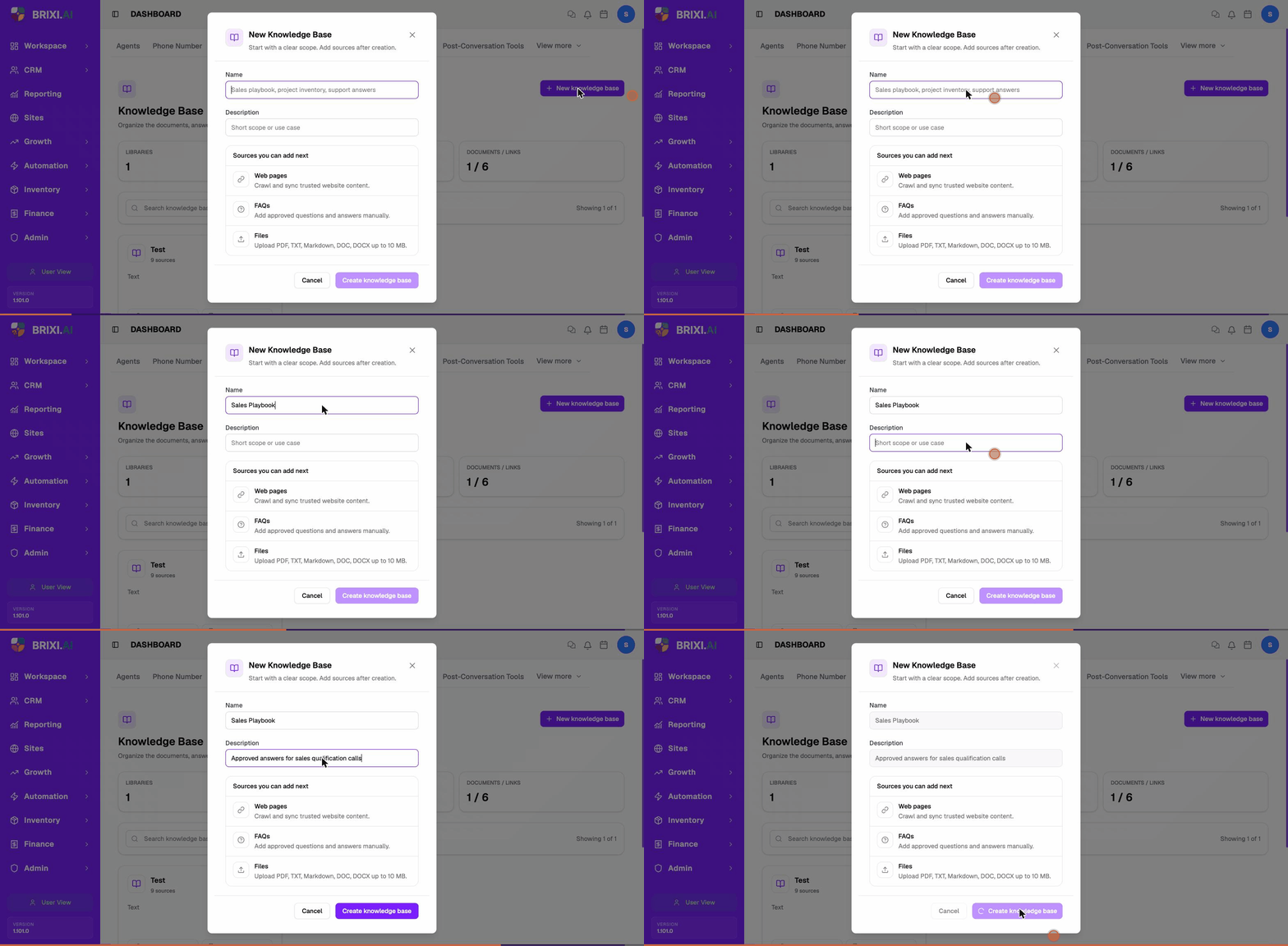
- From the Knowledge Base tab, select + New knowledge base in the top-right.
- In the New Knowledge Base dialog, fill:
- Name — short, descriptive. Examples: Sales Playbook, Project Inventory, Support Answers.
- Description — short scope or use case so other admins know what belongs in here.
- Read the Sources you can add next panel — it lists the three source types you'll add after creation (Web pages, FAQs, Files).
- Select Create knowledge base.
A success toast appears and the new library shows in the list with 0 sources. The card surfaces Links and Files counters so you can see
at a glance how it's growing.
Source Types
| Source | Use when | Limits |
|---|---|---|
| Web pages | You want the agent to use trusted public web content. Crawl and sync a URL on a schedule. | Public pages only. |
| FAQs | You want predictable answers for common questions. Add Q&A pairs by hand. | None — but keep answers short and customer-safe. |
| Files | You want the agent to learn from documents you already have. Upload PDF, TXT, Markdown, DOC, or DOCX. | Each file up to 10 MB. |
Only add content that is ready for customer conversations. Draft marketing notes, internal pricing sheets, unreleased product details, and unapproved legal commitments should not be in an agent's knowledge base.
Add Sources to a Library
- On the Knowledge Base tab, select the library card to open its sources view.
- Add the source:
- Web pages — paste the URL, configure crawl behavior, save.
- FAQs — add the question, the approved answer, save.
- Files — drag a file into the upload area or browse. Wait for the status to move from Processing to Ready.
- Repeat for every source. The SOURCES counter on the top of the Knowledge Base tab increments.
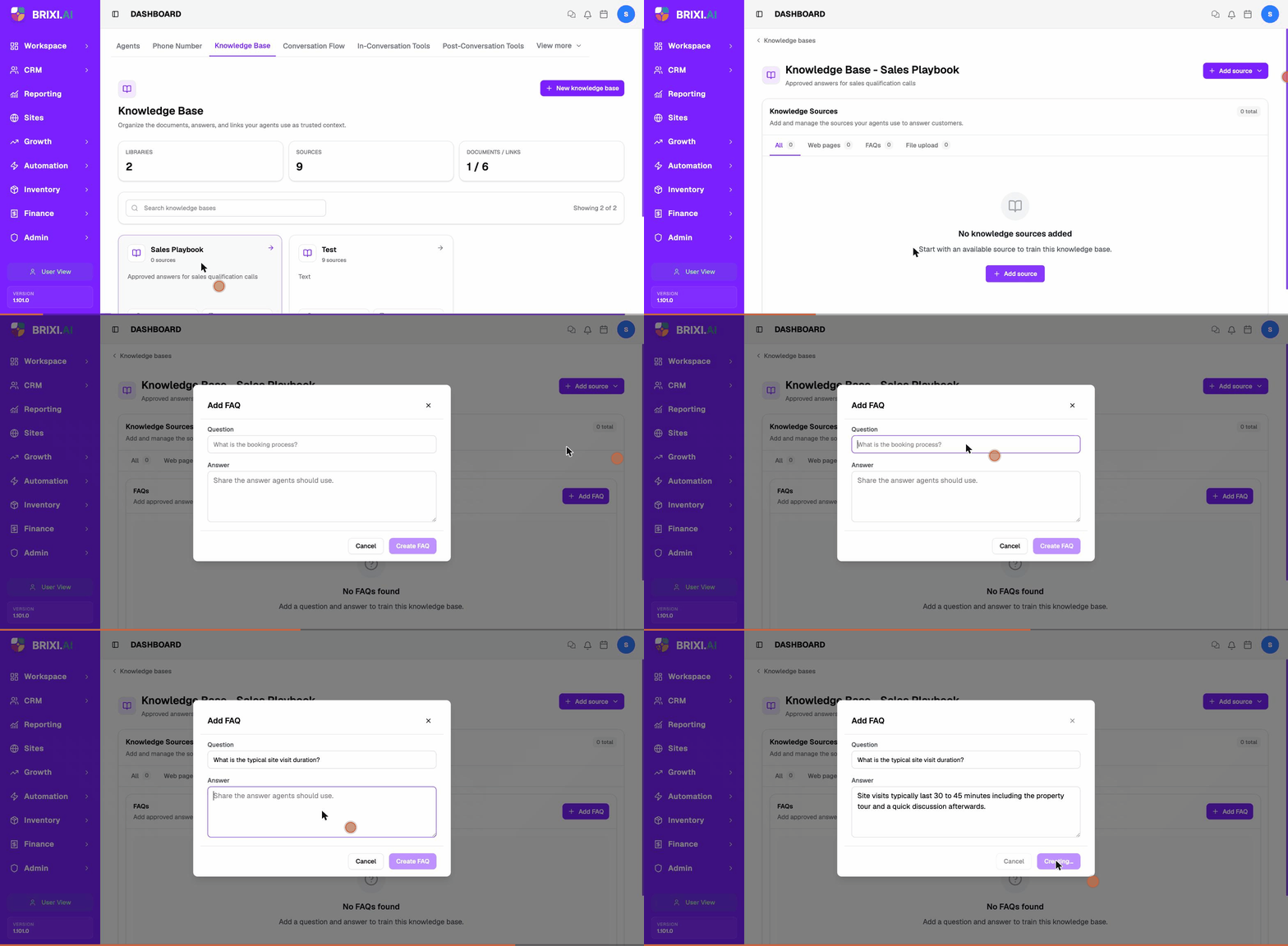
Good FAQ entries are short, specific, and operational. "What sizes do you offer?" with a one-line answer works better than "Tell about the product".
Attach a Library to an Agent
A library only affects calls when it's attached to an agent.
- Open the agent at Automation → AI Assistants → Agents → [agent name].
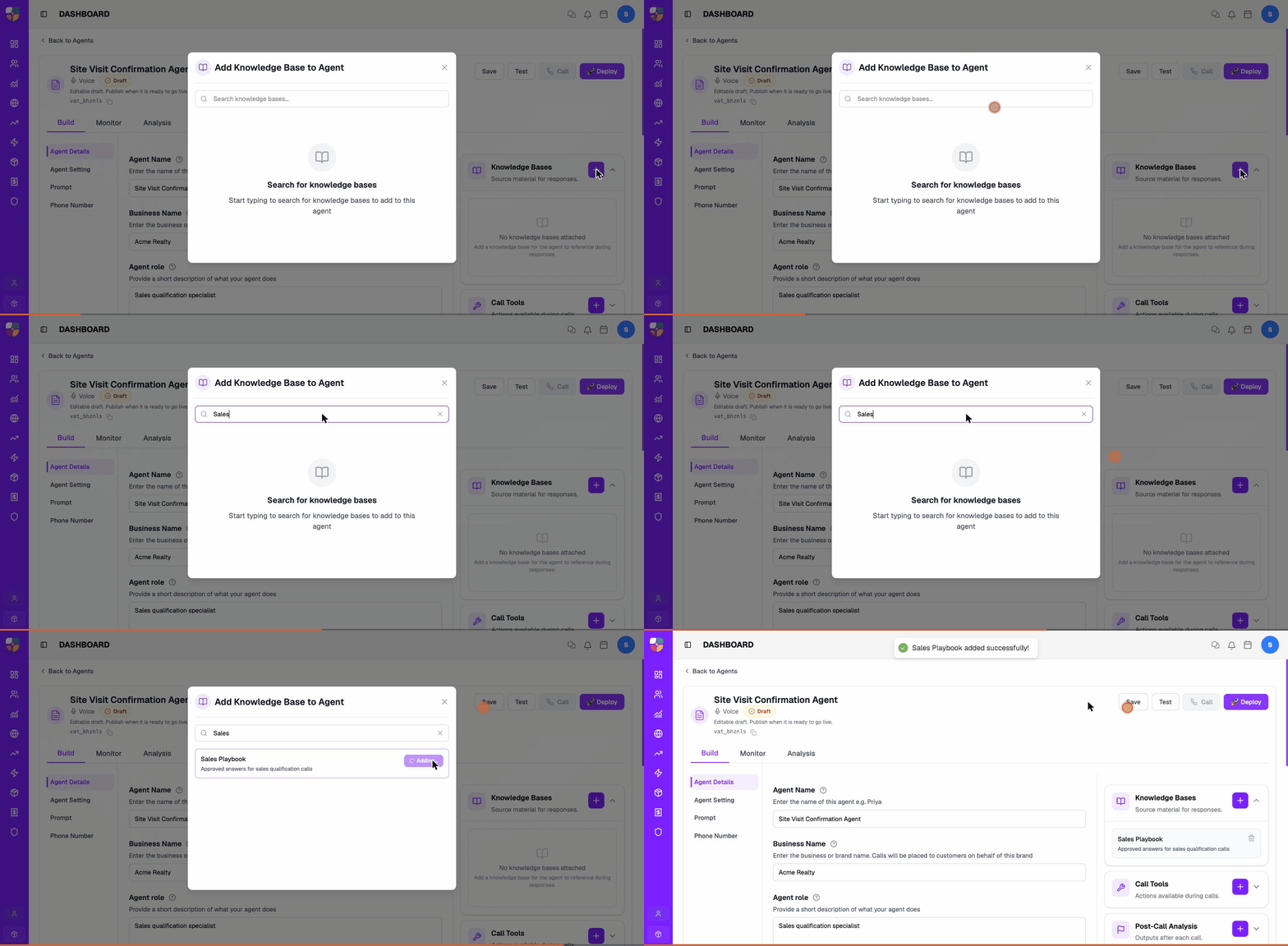
- On Build → Agent Details, find the Knowledge Bases card on the right rail. Its subtitle reads "Source material for responses."
- Select the + button on the card. A picker opens listing every knowledge base in the workspace.
- Choose the library. It moves into the attached list.
- Select Save in the agent header.
Do not attach every library to every agent. Extra unrelated content reduces answer precision. A site-visit agent usually needs project details and reschedule policy — it does not need billing or partner onboarding.
Remove a Library from an Agent
- Open the agent and expand the Knowledge Bases card on Agent Details.
- Find the library row and select the remove (×) control next to it.
- Select Save.
The library stays in the workspace's Knowledge Base tab — it's only detached from this agent.
Maintain Knowledge
Review libraries when:
- Pricing or availability changes.
- A source, offer, or calling run begins or ends.
- A new project, product, or policy is launched.
- Reports show repeated unanswered questions.
- Sales agents report incorrect agent answers.
- Legal, compliance, or brand owners update approved language.
Updates flow to every agent the library is attached to — there's no per-agent copy to sync.
Troubleshooting
| Problem | What to check |
|---|---|
| Agent says it does not know | Confirm the library is attached on Agent Details → Knowledge Bases and the answer exists in clear language. |
| Agent gives an outdated answer | Update or remove the old source, then retest. Recrawl Web pages sources if a URL changed. |
| Agent mixes two projects | Split into one library per project and attach only the relevant one to each agent. |
| Agent uses internal jargon | Rewrite the source in customer-facing terms. |
| FAQ answer is too long | Split it into smaller FAQs or add a prompt rule for concise replies. |
| Upload fails | Check the file is one of PDF, TXT, Markdown, DOC, DOCX and 10 MB or less. |
Creating libraries and attaching them to agents are separate permissions, so if you can browse the Knowledge Base tab but + New knowledge base or the agent's Knowledge Bases card won't cooperate, check with your admin which one you're missing. Wrong answers on calls are usually content, not access — start with the troubleshooting table.
Contact Brixi support if a supported file under 10 MB keeps failing to upload, or a Web pages source won't crawl a URL that's publicly reachable. Include the library name, the source URL or file details, and when you tried.